
If you own a lemon, apple, or avocado tree near your property line, you’ve probably wondered who owns the fruit once a branch crosses into the neighbor’s yard. California has a clear answer, and it surprises most people who haven’t looked it up.
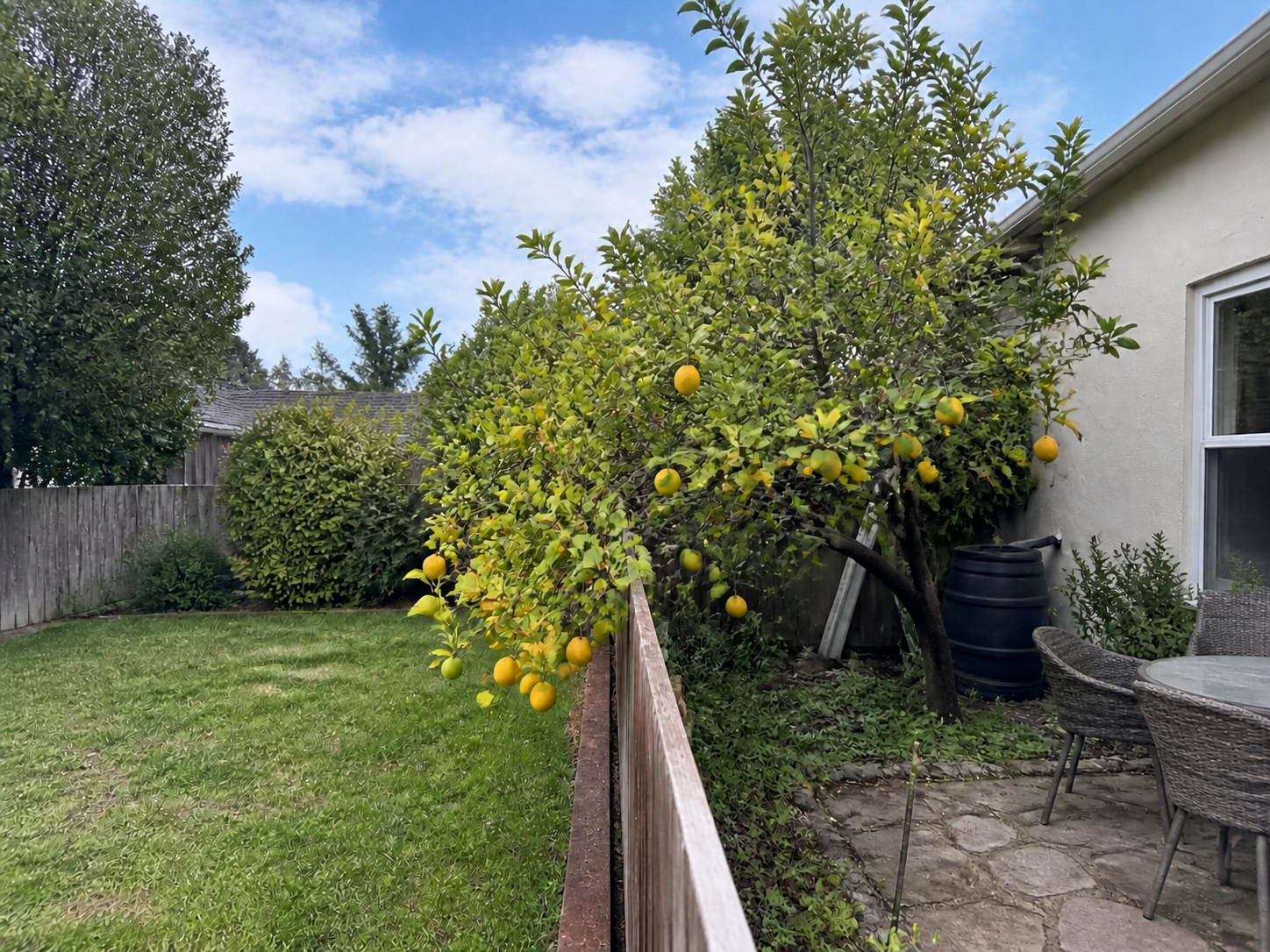
Who owns the tree if a branch crosses the line?
California Civil Code section 833 settles this: the tree belongs to whoever owns the land the trunk is planted on. It doesn’t matter how far the branches reach into the yard next door. A tree planted on your side stays your tree, fruit included, even while it’s hanging over the fence.
Can your neighbor pick fruit still on the branch?
No, not without your say-so. The fruit belongs to the tree, and the tree belongs to you. A neighbor reaching over the fence to pick fruit that’s still attached is taking something that isn’t theirs, even if the branch sits squarely over their side. Few people call the police over a few lemons. But the legal answer doesn’t change: permission first.
Can you trim branches that hang over your yard?
Yes. If your neighbor’s tree crosses onto your property, you can cut it back, on your side, up to the property line. You can’t step onto their land to do it, and you can’t cut into the trunk. If you cut past the line, you are liable for the damage.
What happens if you damage the tree while trimming?
This is where people get into real trouble. If you over-prune, girdle a branch, or otherwise injure a tree that isn’t yours, even one mostly hanging over your fence, you can be on the hook for damages. California law lets a tree owner recover the loss, and courts have awarded well above the tree’s replacement cost for careless or deliberate harm. If a tree needs real work, hire someone who knows what they’re doing and stay on your side of the line.
What if the tree sits right on the property line?
A tree with its trunk on the boundary is a shared tree under Civil Code section 834. Both neighbors own it. Neither one can cut it down or remove a major part of it without the other agreeing. If you’re not sure which kind of tree you have, a licensed surveyor can confirm exactly where the trunk sits.
How to handle it without a fight
Most fruit tree disputes are neighbor disputes first and legal questions second. A short conversation, offering a bag of fruit before it goes to waste, or agreeing on a trimming schedule, settles this faster than any statute. Save the legal groundwork for when talking hasn’t worked.
This isn’t legal advice. If you’re in an active dispute over a tree, a boundary, or anything with real money on the line, talk to a real estate attorney before you act. If a tree dispute comes up while you’re buying a home in the county, it’s worth raising during inspection, before you close.
I’ve worked properties across Santa Cruz, Monterey, and Santa Clara Counties for more than 35 years, and boundary questions like this one come up more than you’d think, especially on older lots with mature trees. If you’re buying or selling a property with a neighbor issue already in play, call me and we’ll sort out what matters before it becomes a problem.
FAQ
Can I trim my neighbor’s tree if branches hang over my yard?
Yes. You can cut back branches and roots up to your property line. You can’t go onto your neighbor’s land to do it, and you can’t cut past the line.
Can I keep fruit that falls into my yard on its own?
Once fruit is on the ground on your side of the line, it’s generally treated as yours to deal with. The dispute is almost always about fruit still on the branch, not fruit that’s already fallen.
Who owns a tree that sits right on the property line?
Under California Civil Code section 834, a tree whose trunk stands on the boundary belongs to both neighbors. Neither one can remove it or cut into it without the other’s consent.
Can I get sued for cutting back my neighbor’s tree?
You can, if you damage the tree or cut past the property line. California law lets a tree owner recover damages, sometimes well above the tree’s value, for wrongful injury to a tree.
What should I do if a neighbor keeps picking fruit off my tree?
Talk to them first. Most of these disputes get settled with a conversation, not a lawyer. If it keeps happening, put your request in writing so there’s a record.