
Deer pressure in Santa Cruz County is real, particularly in the hills above Aptos and Soquel, Scotts Valley, and anywhere along the mountain interface. Most generic plant lists don’t account for local browsing pressure. These five do.
The other thing worth knowing upfront: no plant is truly deer-proof. Deer in a dry August will eat things they normally avoid. What follows are flowers with structural defenses, including toxicity, sticky stems, or scent, that make them reliably unappealing under normal conditions. All five also self-seed, meaning once you plant them, they return on their own each year without replanting.
1. Foxglove (Digitalis purpurea)
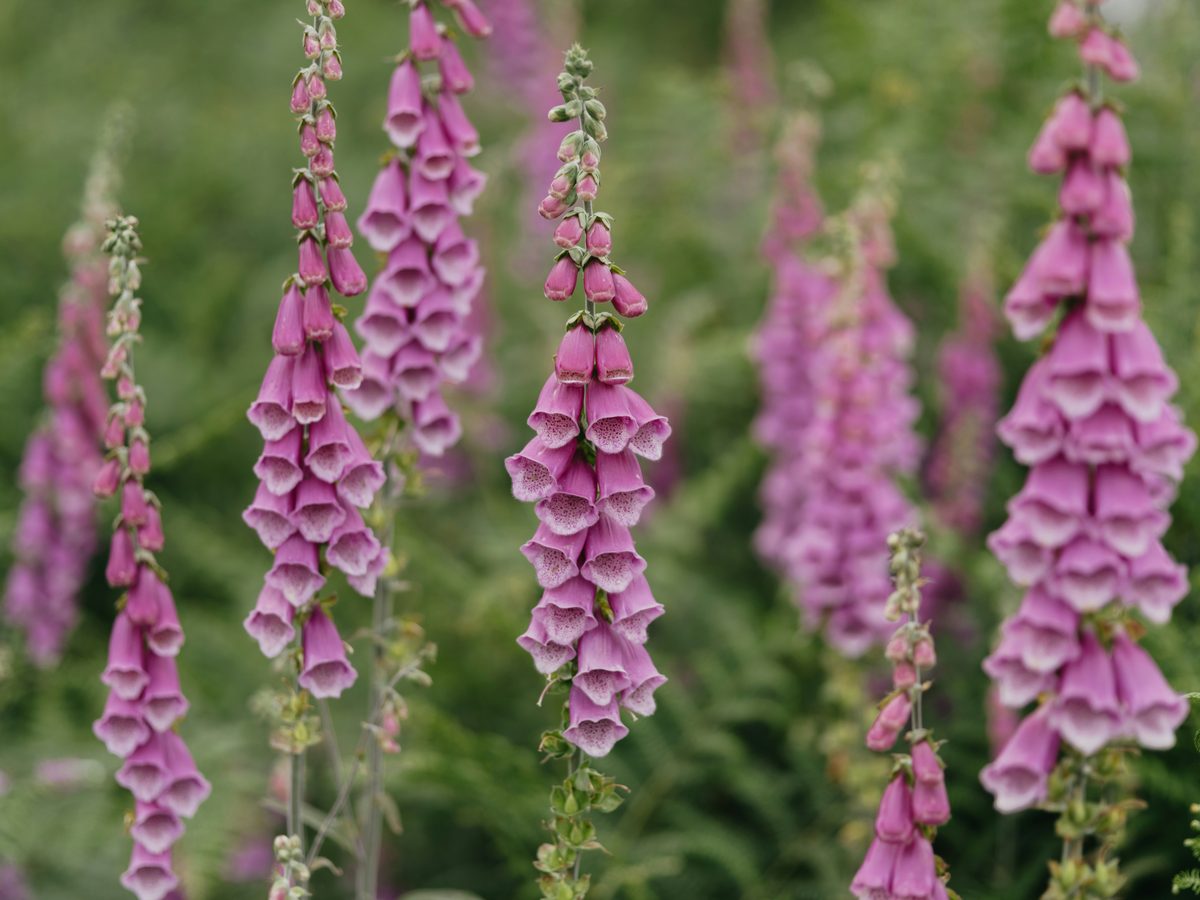 Photo: Annie Spratt / Unsplash
Every part of foxglove contains cardiac glycosides, which are toxic to deer. They know it. They leave it alone consistently, even when browsing adjacent plants.
The flowers are tall spires of bell-shaped blooms in purple, pink, and white that appear in late spring. Foxglove is technically a biennial, but it self-seeds so reliably it functions as a perennial, returning and spreading year after year with no intervention. Santa Cruz’s mild winters are well-suited to overwintering the rosettes.
Plant it in partial shade to full sun, in reasonably moist soil, and don’t fuss over it.
2. Larkspur (Consolida ajacis)
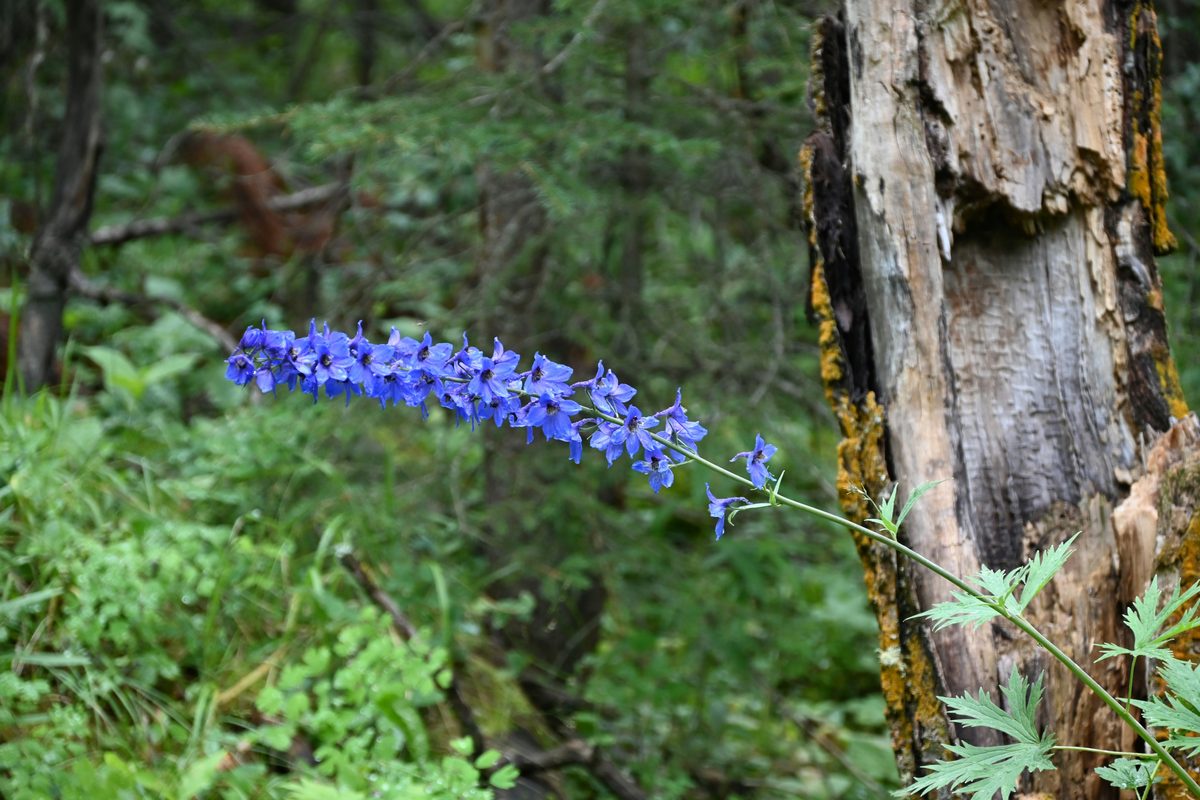 Photo: Len Rempel / Unsplash
Larkspur is toxic to deer and they avoid it consistently. It’s also one of the easier plants to establish here: direct sow seeds in fall or early spring directly onto the soil. Our mild winters work in your favor, and the plants take care of themselves from there.
By late spring you’ll have spires reaching 3–4 feet in deep purple, cobalt blue, lavender, and white. By summer they’ll have scattered seeds for the following year. It naturalizes well on slopes and along fence lines where you want color without irrigation.
3. Lupine (Lupinus)
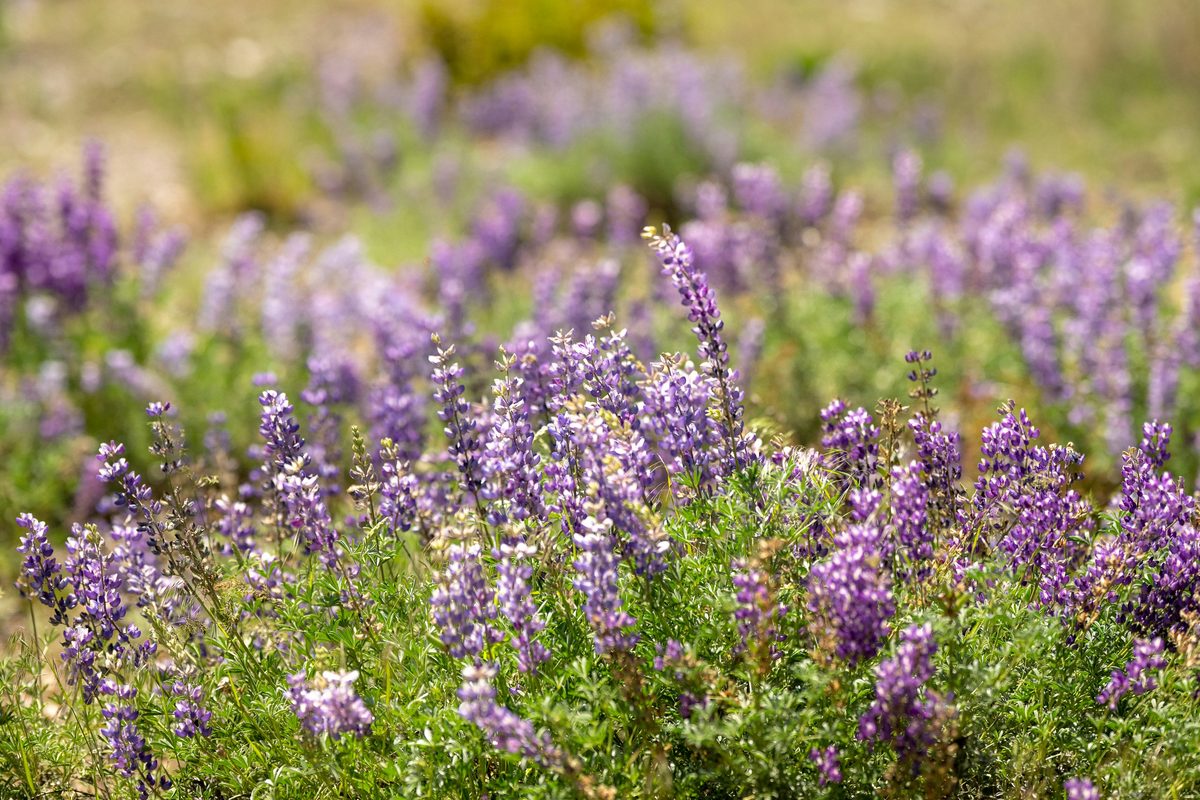 Photo: Michael Kahn / Unsplash
California native lupine varieties grow wild in the coastal hills here, and local deer have learned to pass them by. The alkaloids in the foliage are the reason. Unlike some deer-resistant plants that only hold up when deer aren’t hungry, lupines maintain that resistance reliably through the dry season.
The flowers bloom in spring in deep purples, blues, pinks, and bicolors on tall packed spires that draw pollinators. Lupines also fix nitrogen in the soil, which improves conditions for neighboring plants over time. They prefer well-drained soil and full sun, and once established, they self-seed into permanent colonies.
4. Bladderpod (Cleomella arborea)
Bladderpod is a California native shrub in the same family as cleome, and the strong scent it produces is what keeps deer away. It’s considered deer and rabbit proof by most accounts, which puts it in a different category than “resistant.”
It’s also one of the more practical plants on this list for the local climate. Once established it needs no irrigation, handles south-facing slopes, poor soil, and coastal conditions without complaint, and blooms nearly year-round. The bright yellow flowers with long stamens attract hummingbirds, bees, and butterflies throughout the season. It produces papery, lantern-like seed pods that self-seed into the surrounding area over time.
As a shrub it grows 1½ to 6 feet tall and spreads to about 6 feet wide. Account for that when you place it.
5. California Poppy (Eschscholzia californica)
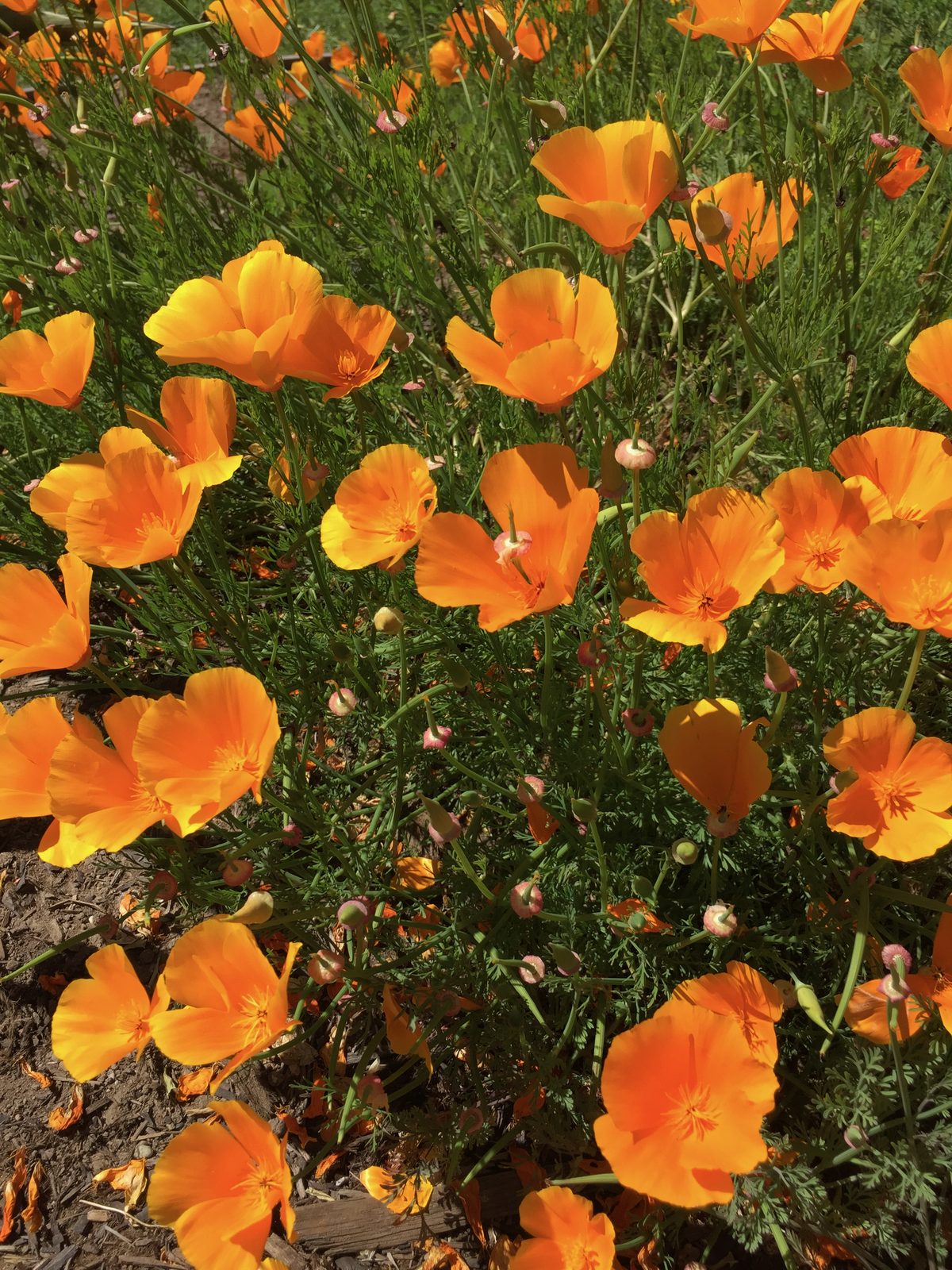 Photo: Walter Stauss
The state flower earns its place here practically, not symbolically. The milky sap is bitter to deer and they avoid it reliably. Scatter seeds in fall on bare, well-drained soil. No transplanting. No elaborate preparation. By February or March, you’ll have orange blooms establishing across the garden. Modern varieties extend the range into pink, red, and cream.
California poppies naturalize over time into drifts that require almost no water once established. They’re also the lowest-effort plant on this list to start. Seeds and bare ground are all that’s required.
A Note on Planting in Santa Cruz County
The mild winters here let you direct sow larkspur and California poppies in fall rather than waiting for spring, which produces stronger root systems and earlier bloom. The coastal fog keeps summers cooler than inland areas. Foxglove and lupine especially benefit from that.
One practical point regardless of which of these you plant: go light on mulch in areas where you want them to reseed. Seeds need contact with soil to germinate. Leave some bare ground, and let them do the work.
Keep going
- Santa Cruz gopher control: what actually works in local gardens.
- Buying in a fire zone: hillside-property review beyond landscaping.
- Aptos and Soquel area guide: hills, village areas, beach-close homes, and land systems.
- San Lorenzo Valley area guide: redwood homes, fire risk, wells, septic, and road access.
Frequently Asked Questions
What flowers do deer avoid in the Santa Cruz area? Deer in Santa Cruz County reliably avoid foxglove, larkspur, lupine, bladderpod, and California poppies. Plants with toxic compounds, strong scents, or rough and sticky textures are the most consistent performers in this area’s conditions. If you are comparing hillside properties, also review the Santa Cruz fire zone guide.
Are self-seeding flowers actually low maintenance? Yes, once established. The first season requires planting; after that, these flowers drop their own seeds and return without replanting. The main ongoing task is thinning seedlings if they become too dense.
What can I plant on a hillside in the Santa Cruz Mountains that deer won’t eat? Larkspur, California poppies, and lupines all naturalize well on slopes, handle dry conditions once established, and are reliably passed over by deer. They’re practical choices for hillside plantings where irrigation is limited.
Do deer eat foxgloves? No. Foxgloves contain cardiac glycosides, which are compounds that are toxic to deer. They’ve learned to recognize and avoid the plant, making it one of the most dependably deer-resistant options available.
When should I plant these flowers in Santa Cruz? Fall is the right time for larkspur and California poppies. They establish over winter and bloom earlier as a result. Foxglove and lupine can be started in late winter to early spring. Bladderpod can be planted in fall or spring and establishes quickly once in the ground. The Santa Cruz County climate extends your planting window compared to most of California.
If you’ve tried any of these in your yard, I’d like to know what happened. Email me at walter@831.net. A photo of your garden is useful.